Women in Photography

May 12th, 2008

Cara Phillips, one of the artists behind the recently announced Women in Photography, has put a fabulous post on her blog listing a number of women artists who have made their mark.

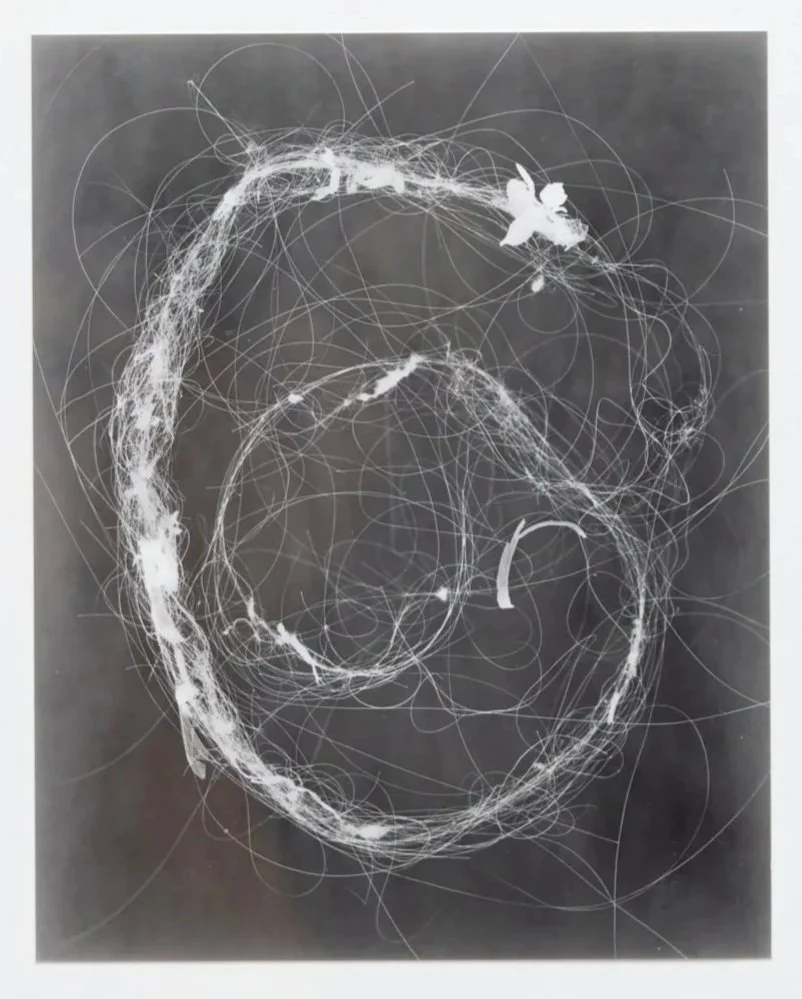
Ruth Hallensleben

Image by Ruth Hallensleben

The inaugural Light Box Project exhibition Flânerie and Figments has recently been set up in Courtney Place Park, Wellington.

The light box project is an intense, highly public exhibition space featuring eight 3-metre tall, cor-ten steel and glass, LED boxes. The space has a backdrop of buildings, buses and trees instead of the traditional white walls of a gallery. This is the first exhibition space of its kind in New Zealand.

Flânerie and Figments, curated by Simon Bush-King and Andy Palmer, features contemporary photography by eight Wellington artists. The exhibition comprises 16 images which feed off and critique Wellington’s urban condition. Flânerie and Figments encourages people to consider their understanding of and relationship to the city. From the Light Box Project press release.

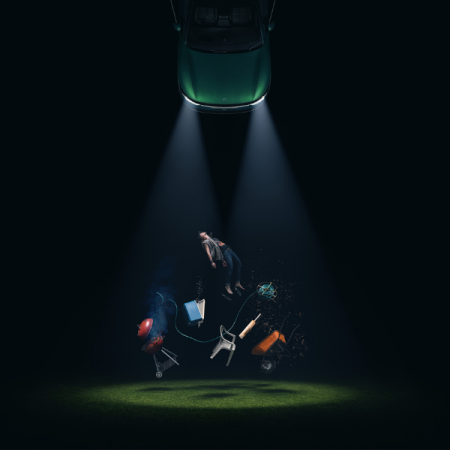
Victoria BirkenshawPhoto by Andy PalmerClare Noonan

Photo Credits:
L to R
Victoria Birkenshaw  The Red Scorpion, 2007
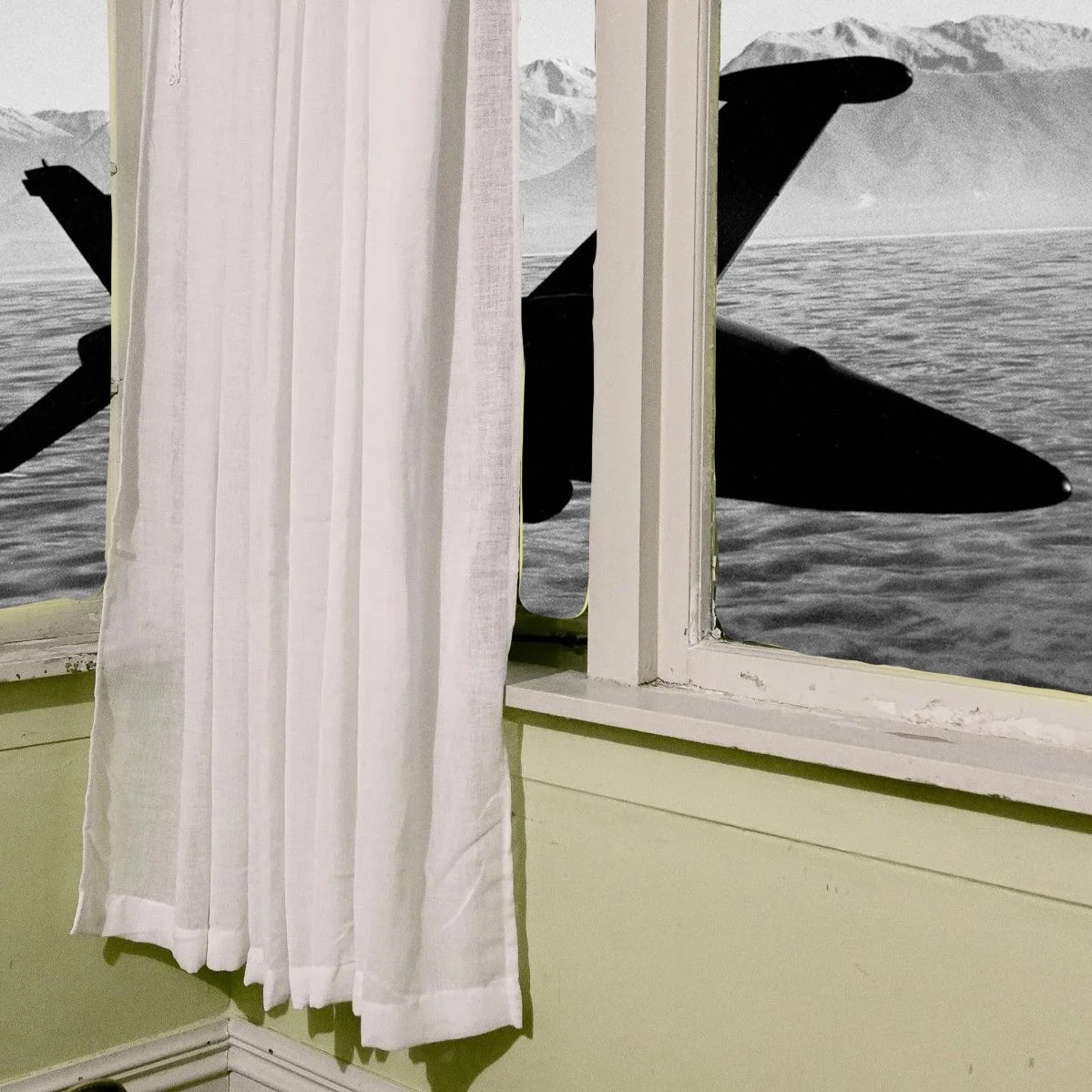
Andy Palmer  where wast thou when I laid the foundations of the earth? #1, 2005/2007
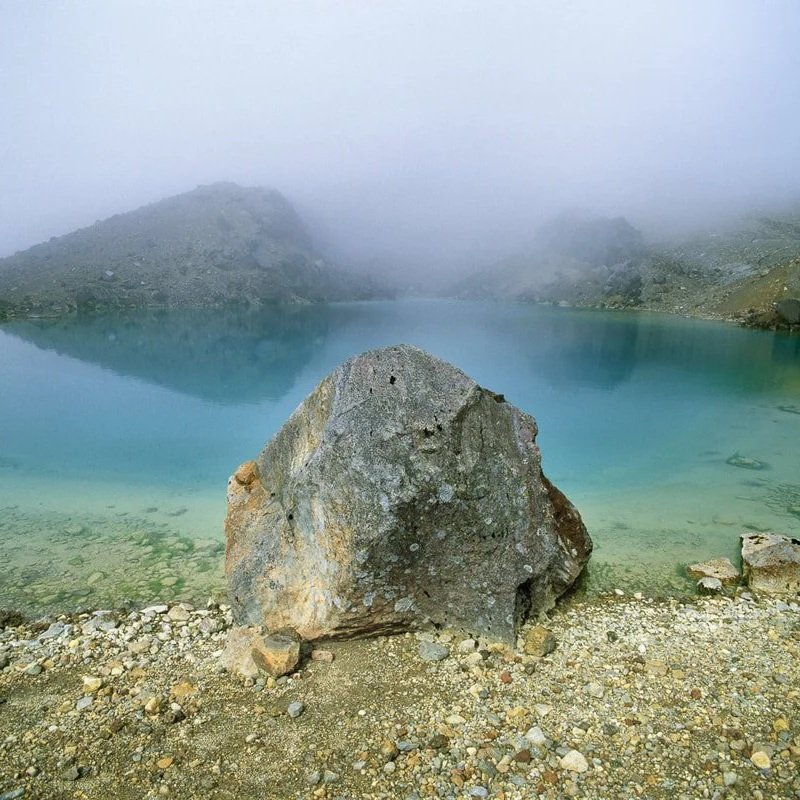
Clare Noonan  Shoreline 2, 2008


This exhibition features work by Andy Palmer, John Lake, Victoria Birkinshaw, Shaun Lawson, Amelia Handscomb, Steve Rowe, Jessica Silk and Clare Noonan. All contemporary, Wellington based artists but, as James from Photography Matters puts it “not the usual suspects, but the up and comers, the real contemporary photographers.”

James gives a good description of the opening and some on the works on his blog. Be sure to read the comments as they include some reflection on the project by one of the curators and photographers, Andy Palmer.

Andy has also written a few posts about the process on his blog, check them out here and here. In his role as co-curator Andy sourced the participating photographers - Good one Andy! (okay so being Auckland based I haven’t actually seen the photographs yet but my enthusiasm is based on all this wonderful internety information).

Light Box Project - Courtney Place Park

Light Box Project - Courtney Place Park

Light Box Project - Courtney Place Park

Light Box Project - Courtney Place Park

Photo Credit: Andy Palmer

Andy has commented in one of his blog posts that they’re still expecting some controversy. It sounds like he won’t be disappointed: from Photography Matters, “One image, by Shaun Lawson, shows a young woman who has suffered a beating from her partner. (This image may soon be withdrawn and replaced by another in the same series.)” One question that springs to mind is, is the exhibition more challenging or more successful if it invites controversy? However it may be that the sensibilities of the public (or particularly vocal members thereof) are offended by an image which in all probability invites thought and challenges perceptions. Again though, without seeing the image in question or knowing the background it’s hard to say. I’ll be interested to hear how that one plays out.

It seems that this exhibition, and those to come, was made possible by the Public Art Fund, a Wellington City Council initiative. (Listen up Auckland City Council!) These works are on show for 6 months and seem well worth a trip to Wellington for…..

Not long now until the Auckland Festival of Photography begins.

Their online programme is broken into 4 catagories; Culture; Identity; Participation; Art. Somewhat confusing as none of these categories are mutually exclusive.

For a full (uncategorised) list of events check out the calendar here.

You can sign up for their e-newsletter here.

.Stars by Roberta Thornley

Image: Stars by Roberta Thornley
Showing in ‘Pine’ at Tim Melville Gallery

NZCP closure?

May 8th, 2008

The New Zealand Centre for Photography currently has this notice on its front page:
“Due to financial constraints the Centre has reluctantly had to suspend services until further notice while plans are developed to establish a viable ongoing operation.”  This is followed by a letter to member’s and friends, by Chairman Peter Ratner.  The letter, while considerably longer than the above statement, doesn’t tell us much more.

As a member and a long time reader of the NZ Journal of Photography I’m sad to hear that it has been suspended.  The Journal was a good read and an important part of NZ’s somewhat limited discussion around art and documentary photography.
What’s most alarming to me is that there doesn’t seem to be any discussion around this, at least not on the internet.  The letter has been on the NZCP site for almost a month and the only item I can find responding to it is this post on Photography Matters.  Perhaps many of the people interested in the NZCP are not internet savvy or are conducting their conversations in other forms (perhaps even in person… like in ye olde times?)

Does anybody who is reading this have a response to what seems to be the end of this photographic institution and publication?  If so please leave a comment and perhaps some helpful discussion can be had?

Welcome to my first blog; I intend it to be the first of many monthly posts on topical photo related issues. I want to begin by talking about limited editions in photography.

Oftentimes galleries try to influence photographers into making small limited edition print runs (say three to five). This is based in an un-inspected assumption held in our culture that replication lessens value (both extrinsic and intrinsic). I guess this began with Ford and the assembly line, but whatever the reason, in our culture if a piece of art is singular, it is worth more—even if it is just a cow in formaldehyde . Art buyers want to purchase something that appears to be ‘one of a kind’. People assume that because print makers deal with this problem by producing numbered runs, so should the photographer.

Given this cultural context, to produce a limited edition is to say to viewers: “all my prints are essentially the same.” For this reason, producing numbered runs makes sense to those working in digital, because prints are all essentially the same and printing is often done by an outside technician, rather than the artist (to see a good example of someone doing this check out Cara Weston’s website). For those of us still printing from our own original negatives however, producing limited editions makes others view our work in an untruthful way.

Negatives are subtle and can be interpreted in various ways (with variations in tonality, emphasis on detail and local contrast). Each print is different to any others made from the same negative. Sometimes when I print, this difference is subtle, and sometimes I print a negative in an entirely different manner than before. I never make the same print twice. Many other traditional black and white photographers I’ve talked to say the same. Harry Callahan once said that he never made limited editions because every print he made was unique.

I think this point of view is important to hold onto in the midst of the current trend towards digital and other forms of standardised reproduction. I say this because making a print is almost as important to the art as making the negative. I feel this understanding is being lost in the current climate, and the movement towards limited editions only compounds this. Ansel Adams, who was a self taught concert pianist, likened his negatives to the musical score and his prints to the performance (check out: Stories from the Vaults with Tom Cavanagh on You Tube, where a curator mentions this when talking about his work).

In a market where this is understood, buyers will readily purchase prints, and not worry about whether they are limited editions. In the United States, this is the case. Ansel Adams made about 1000 prints of his famous “Moonrise, Hernandez” and one of these recently sold for over half a million dollars at Sotheby’s auction .

Doing limited editions in traditional photography compromises the artistic integrity of the photographer and undermines audience understanding of the singular artistry of a print. Also, given that buyers will purchase good art regardless of how it is sold, there is no practical need to package your work as a limited edition.


Next up: Ever heard of Pyro film development?

Richard Maloy

April 27th, 2008

Image by Richard Maloy

More work by Richard Maloy on the Sue Crockford Gallery website.

Image by Emily Bullock

Private Park opens at Mary Newton Gallery on 30 April. It features new work by six artists – Emily Bullock, Mary Macpherson, Andy Irving, Andrea du Chatenier, Jim Wheeler, and Joanna Langford.

Jim Wheeler and Mary Macpherson provide the nature in the park. Macpherson’s large scale photographs present regenerated nature found in urban areas. In contrast Jim Wheeler’s bronze branches simulate nature with chilling stillness.

Emily Bullock and Andrea du Chatenier provide the park’s creatures. Bullock’s bird dogs are fantastic creatures – dogs with feathers and wings. Du Chatenier’s monkies are like mutant relics from the Planet of the Apes.

But there are also signs of human habitation - Andy Irving’s studio images and Joanna Langford’s tiny crumbling stadiums. Irving’s interest is in notions of the ghostly mediated via constructions and drawings. Langford presents a monument in decay.

Private Park runs until 26 May 2008.
Mary Newton Gallery
150 Vivian St
Wellington

For further information or images please contact Mary-Jane Duffy or Paula Newton: tel 385-1699 or see www.marynewtongallery.com

Image: Emily Bullock

On the way to an ambush

April 23rd, 2008

“if you get caught in an ambush, you have point eight of a second to live.” I can’t wipe this astonishing calculation from my mind and figure I will be dead before I know there is an ambush. No one will want to see my passport. Bruce Connew

In 1989, New Zealand photographer Bruce Connew spent five weeks in Burma, observing the Karen people’s war with the Burmese government troops. Two years after his return, a book of the images, On the way to an ambush, was published.

On the way to an ambush is now a 40-image exhibition, running from May 1 to July 31, 2008, at War Photo Ltd, Dubrovnik, Croatia.

Published in 1999 by Victoria University Press, New Zealand, the book has long been thought out-of-print. However, in a rare twist of fate, 150 copies of the book have recently been discovered, tucked away in a distributor’s warehouse. As a limited edition end to the print run, 100 copies have now been numbered and signed, and are for sale as a multi-media package. Each book will be accompanied by a signed pigment print on archival Hahnemuhle cotton rag paper, and a DVD of a contemporary recording of a performance/presentation, first given in 1998, of the book’s visual material with Bruce’s scripted voice over.
The book package is available at War Photo Ltd and Mary Newton Gallery, Wellington,
New Zealand.

Bruce Connew ‘On The Way to an Ambush

Revolutionary Effervescence

April 22nd, 2008

John Mraz and Eli Batra discuss the work of Mexican artists Frida Kahlo and Manuel Alvarez Bravo.

Thursday 24th of April
6.30pm
Auckland University

John Mraz and Eli Batra discuss Frida Kahlo and Manuel Alvarez Bravo

Living With Cancer

April 18th, 2008

Living with Cancer is a powerful and moving photographic exhibition currently being held at the Depot Artspace in Devonport.  Living with cancer documents the story of a mother and daughter dealing with cancer.

Through a combination of photos and a journal, the exhibition tells the story of North Shore mother, Sandra Johnson, and her eight-year-old daughter, Finlee.

Finlee was diagnosed with bone cancer in September last year. The exhibition documents the ups and downs of her treatment and life in Starship Hospital, the wonderful support of friends and family, and the emotional journey that no mother should have to go through.

The exhibition is a collaboration between Sandra and her close friend, photographer Michelle Hancock. Wayne Hancock is the designer.

They have organised it to raise funds for the rebuild of the Starship Hospital’s Oncology Ward, which currently has limited and crowded facilities that make life even more difficult for families struggling to live with cancer.

The exhibition is being held at The Depot Artspace, 28 Clarence Street, Devonport, from 19 April to 30 April.